


Nicene #7 Belfast
Belfast: What Are the Walls For?
Nicene #7

For our sake he was crucified under Pontius Pilate;
he suffered death and was buried…
—
The peace wall is covered in messages.
Schoolchildren.
Tourists.
Visitors from places Ryan has never been.
People travel halfway
around the world
to look at a wall
built because neighbours
were afraid of one another.
His son presses a hand
against the concrete.
“What’s this for?”
Ryan looks up.
The wall is taller than he remembers.
Or perhaps that is because
he is standing beside it
with a three-year-old
who still believes strangers
are potential friends.
“It’s a long story,” he says.
The boy nods
and runs ahead.
Ryan remains where he is
for a moment.
The answer feels too small
for the question.
Most mornings begin before sunrise.
Tea and toast.
The radio on low.
A quick kiss for Emma
before the drive across East Belfast
towards the factory.
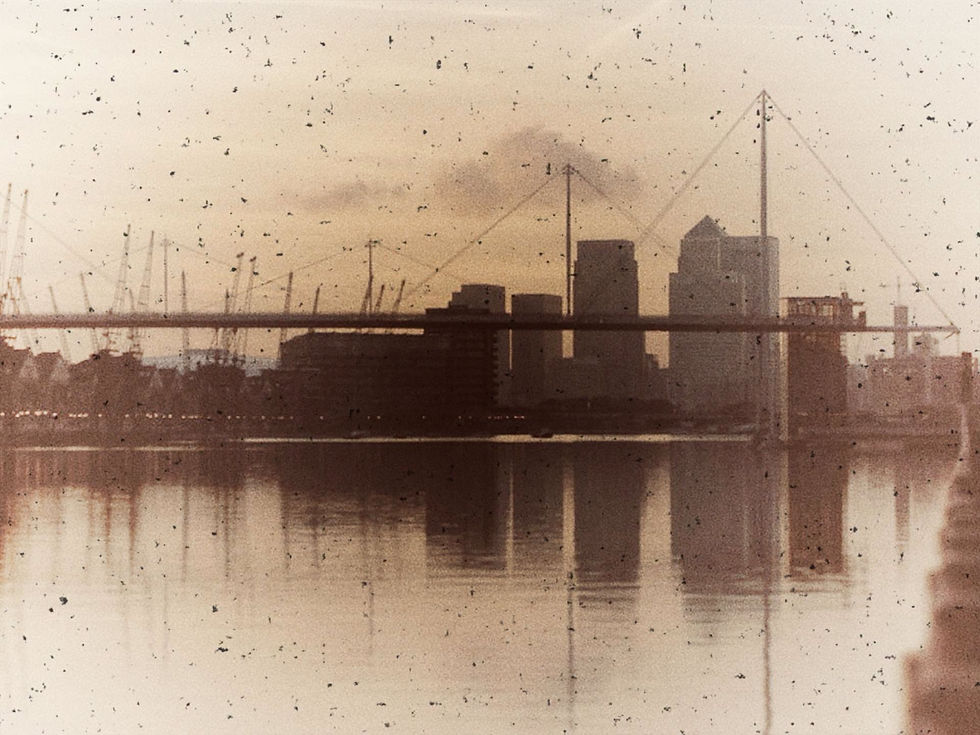
The cranes stand over the docks
as they always have.
Samson and Goliath.
Part of the skyline.
Part of the city.
The shift starts at seven.
Machines hum.
Forklifts reverse.
Men talk.
Football.
The price of heating.
Whether the politicians know
what they are doing.
Whether anybody knows
what they are doing.
Lately the conversation
often turns to immigration.
A few weeks ago
there was a stabbing.
The details shifted
depending on who was telling the story,
but the anger spread quickly.
By teatime
everybody had an opinion.
By evening
social media had decided
who was to blame.
Some of Ryan’s mates
went to a protest.
The protest became a riot.
Videos appeared online:
burning bins,
police vehicles,
young men with scarves
over their faces.
The sort of images
Belfast knows too well.
Ryan stayed home.
Not because he thought
everything was fine.
He worries about housing.
About whether his son
will ever afford
a place of his own.
About jobs.
About a world that feels
less secure than the one
he was promised.
These worries are real.
But he also knows
what it feels like
when people talk about communities like his
without ever setting foot in them.
He knows what it feels like
to hear working-class people discussed
as though they are a problem.
The factory finishes at four.
Most evenings
another job begins.
Ryan delivers takeaways until late.
Curries.
Pizzas.
Chicken boxes.
Night after night
he crosses parts of Belfast
older generations crossed
more carefully.
Past murals.
Past churches.
Past new apartment blocks
and boarded-up shops.
Past rows of flags
still hanging long after summer
has ended.
By the time he gets home
his son is usually asleep.
Some nights he stands
outside the bedroom door
for a moment,
listening.
The small sound of breathing.
Before becoming a father
he never knew
how much love could feel
like worry.
His granda says
parenthood changes
the shape of your fears.
Ryan thinks
he might be right.
His granda is eighty-three.
Bad knees.
A memory full of names.
Some belong to friends.
Some belong to people
whose photographs ended up
in newspapers.
One Saturday afternoon
they visit him.
Tea is poured.
Biscuits appear.
The television mutters in the corner
while conversation drifts
towards the past.
Bomb scares.
Army checkpoints.
The sound of helicopters overhead.
The strange normality
of living alongside fear.
His granda shakes his head.
“I thought we’d have sorted it by now.”
Ryan knows
he isn’t talking about politics.
Not really.
His granda stirs his tea.
“You know what the problem is?”
Ryan waits.
“Everybody still thinks
they’re the good ones.”
The old man shrugs.
“Always starts there.”
Before they leave,
Ryan’s son points
at a cluster of flags
fluttering from lamp posts.
“Why are they there?”
His granda laughs.
“That’s another long story.”
A few weeks later
Ryan finds himself in church.
Not every week.
Most weeks
life gets in the way.
But becoming a father
has unsettled something in him.
He wants his son
to have something
he never really had.
Not answers.
Something deeper than that.
A story large enough
to live inside.
The congregation is ordinary.
Teachers.
Tradesmen.
Retired couples.
Young parents
trying to stop children
escaping from pews.
Nobody seems to have
everything worked out.
That helps.
Then the Creed begins.
For our sake
he was crucified
under Pontius Pilate.
The sentence catches him.
Pilate.
An actual name.
A real governor.
A reminder that this happened
somewhere.
Under someone.
In the middle of history.
The reading is from Luke.
Pilate blames the crowd.
The crowd blames Jesus.
Religious leaders
blame troublemakers.
Rome blames everybody else.
Nobody wants responsibility.
Everybody is looking
for somewhere else
to leave the burden.
Ryan thinks of Belfast.
Then he thinks
of factory conversations.
Social media.
Election campaigns.
The endless search
for somebody to blame.
And suddenly
the cross looks different.
Jesus standing
where blame gathers.
Caught between competing tribes,
competing stories
and competing powers.
A man nobody wants
responsibility for.
Outside,
rain taps against the windows.
His son is colouring.
Emma is singing.
A woman lights a candle.
The ordinary holiness
of ordinary people.
Driving home afterwards,
they pass the peace wall again.
Rain streaks the windows.
The city lights blur.
His son is half asleep now,
head tilted against the car seat.
Ryan looks at the wall
sliding past beside them.
Concrete.
Steel.
Decades of fear.
Decades of memory.
Decades of people
trying to keep safe.
He thinks about his granda.
About the lads
who went to the riot.
About the families
who arrived in Belfast
looking for a better life.
About his son.
The stories he will inherit.
The stories he will question.
The stories he will make his own.
At a red light
Ryan glances in the mirror.
The boy is awake again.
“Da?”
“Aye?”
“What’s it for?”
Ryan looks once more
at the wall.
Then at the road ahead.
Belfast shining in the rain.
For a moment
he thinks about all the answers
people have given over the years.
The flags.
The walls.
The funerals.
The speeches.
The certainty.
Then he thinks about his son.
About the city
he hopes he will inherit.
Not perfect.
Just kinder.
A place where belonging
doesn’t require an enemy.
The lights change.
Traffic begins to move.
The wall falls behind them.
“I don’t know, son,” he says.
The boy seems content with that.
Soon he is asleep again.
Outside,
Belfast keeps breathing
in the dark.
And Ryan wonders
what stories
should be handed on,
and which ones
can finally be laid to rest.
Rev’d Jon Swales


Comments