


East of Eden: It Troubles Him
He reads it online
in the waking light of morning,
joining others for prayer
with Leeds Minster in the background—
stone, candlelight,
old memorials to war
fixed quietly in the walls,
names held still
by cold brass and silence,
boys once sent out
and returned as names.
The city is already stirring.
Buses cough awake.
Shops lift their shutters.
Someone sleeps in a doorway
beneath a bank’s bright window.
Leeds remembers, again,
what it kneels to.
Psalm first.
Then Exodus.
Then the trouble.
Because in Exodus
YHWH says:
Let me alone,
that my wrath may
burn hot against them.
And later—
Kill your brother,
your friend,
your neighbour.
And the priest flinches.
Because he knows
what happens
when men with power
find God on their side.
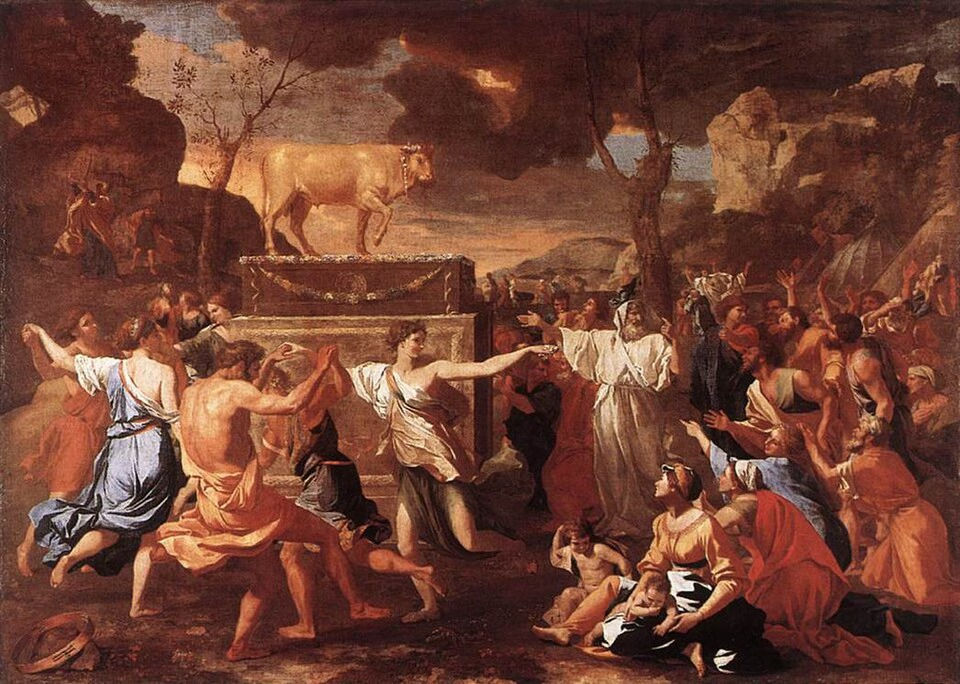
The mountain burns.
The people dance.
Gold shines
like something holy
and something false.
East of Eden,
the old violence survives.
Abel is still bleeding.
Cain still builds cities.
Pharaoh only
changes uniforms.
And he reads it
with Gaza in his chest,
with Ukraine under sirens,
with Iran spoken aloud
by men who discuss missiles
like accountants discussing rain.
Children lifted from rubble
like broken liturgy.
Mothers learning grief
by repetition.
Flags flying proudly
over someone else’s grave.
And behind the prayers,
those memorial stones—
young men taught
to call slaughter duty,
their names now kept
by pigeons and dust.
So when the text says
the Lord commanded it—
three thousand fallen,
the camp running red—
he does not tidy it.
He lets it accuse him.
Because he knows
scripture can be used
like a weapon
with very clean hands.
He has heard empire pray.
He has watched nations
baptise bombs.
He has seen the poor
pay for the rich man’s calf.
The idol is never
only an idol.
Sometimes it is gold.
Sometimes a flag.
Sometimes an economy.
The calf still glitters.
It just has
better branding.
And deeper still—
he wonders about God.
Is this who YHWH is?
Fire and mercy
in the same mouth?
Does Exodus reveal God,
or only a people
trying to name holiness
with blood still on their hands?
Is the Lord divided—
Sinai one day,
Sermon on the Mount the next?
No.
He has seen
too much Jesus for that.
Too much table fellowship.
Too much mercy
for failures and fools.
Too much bread broken
for enemies.
Too much blood
that says forgive them
instead of finish them.
Christ is the measure.
Not the polite Christ
framed safely
on church walls,
but the wild Messiah
who touched lepers,
overturned tables,
and let empire nail Him up
rather than become it.
If God is like anything,
God is like Jesus.
So Sinai must walk
through Calvary.
The fire must pass
through wounds.
And still
he will not soften Exodus.
He will not bleach
the blood out.
Will not make
the dead symbolic.
Some texts arrive
like bricks through windows.
Some passages
must be carried
more like stones
than slogans.
Quietly,
he is grateful
he does not have to finish
the reading and say
This is the word of the Lord.
Not yet.
Not before Jacob’s limp.
Not before Emmaus.
Not before the long argument
between the text
and the heart.
Because scripture
is not dictation.
It is a road at dusk.
A stranger beside you.
A conversation
that leaves your chest burning.
He reads the text
and the text reads him.
It asks him
which calves
he still protects.
Which empires
he still calls normal.
Which violences
he has learned
to rename as policy.
Prayer becomes argument.
Argument becomes prayer.
And perhaps faith
is simply refusing
to leave the table.
Staying long enough
for bread to be broken.
Long enough
for the stranger
to be recognised.
Because in the end
the truest word
is not the sword
but the scar.
Not violence blessed,
but violence borne.
Not revenge,
but resurrection.
The final mountain
is not Sinai in flames,
but Calvary—
where Love
takes the worst thing empire can do
into His own body
and answers still
with peace.
—Rev’d Jon Swales
Artwork: Adoration of the Golden Calf — Nicolas Poussin


Comments