


Apollo’s Face, Hercules’ Body, Trump’s Ego
- Apr 16
- 3 min read


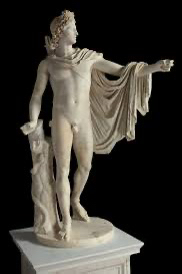


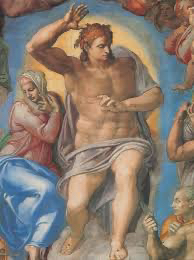
Yesterday my wonderful wife treated me to a guided tour of the Vatican Museums with an art historian.
I am still carrying it round with me.
The place is breathtaking. It really is. Marble and gold and pigment and centuries of prayer, power, fear, longing, all pressed into stone. You can feel the weight of history there. Human beings reaching for transcendence. Human beings reaching for power too.
And perhaps those two have often been closer than we like to admit.
What has stayed with me most, though, is not the grandeur but the fisherman’s boat as you enter.
Peter’s boat.
Wood and water.
Nets and weather.
The memory of work.
The smell, almost, of lake wind and calloused hands.
What a strange threshold.
Before the marble.
Before the throne.
Before Constantine.
Before empire.
A boat.
And then the galleries open up.
Roman gods and heroes everywhere.
Apollo first.
That face.
Calm, beautiful, symmetrical, the kind of face a civilisation puts on its coins and crowns. The face of order. The face of power when it wants to appear serene.
Then nearby a headless Hercules torso.
All muscle.
Chest and abdomen.
A six-pack in marble.
Strength without vulnerability.
Heroism without wounds.
I would never have made the connection myself.
It was our guide who gently drew the thread.
Then we entered the Sistine Chapel and she pointed to Christ in The Last Judgment.
Once she said it, I couldn’t unsee it.
There is something of Apollo in the face.
Something of Hercules in the body.
Apollo’s face.
Hercules’ torso.
Christ imagined through the beauty standards of empire.
And I found myself thinking how every age does this.
We keep giving Jesus the face we most admire.
The Renaissance gives him the body of a hero and the face of a god.
Our own age gives him the smile of success and the polish of branding.
Albert Schweitzer once wrote that scholars looking for the historical Jesus can end up like a person leaning over a deep well only to find their own face looking back.
That line came back to me in the chapel.
How often do we do the same?
The nationalist finds a nationalist Jesus.The middle classes a respectable Jesus. Consumer culture a Jesus who blesses aspiration and comfort.
Slowly, almost imperceptibly, we refashion him until he blesses the gods of our age.
Success.
Security.
Nation.
Growth.
Influence.
Apollo and Hercules are still with us.
They have simply changed names.
Market. Platform. Brand. Strongman.
Which is why I couldn’t help thinking of Trump sharing that AI-generated image of himself as Jesus.
White robes. Haloed light. Healing gesture. The whole thing soaked in messianic symbolism.
It would be easy to laugh it off.
But I think it reveals something older and darker.
The temptation to borrow the moral aura of Christ.
To put your own face where only Jesus belongs.
To cast political power in salvific light.
To make the leader look like the saviour.
From fresco to algorithm.
The medium changes.
The temptation does not.
And perhaps if we are honest, it is not only Trump.
The temptation lives in all our projections.
The Jesus of nationalism.
The Jesus of prosperity.
The Jesus of church growth.
The Jesus who never troubles the gods of our age.
And yet when Jesus preached the kingdom of God, I cannot imagine he had the Vatican in mind.
Not because beauty is wrong.
The Vatican is astonishing.
And I do not want to pretend otherwise.
But the kingdom begins elsewhere.
A boat.
A hillside.
A borrowed room.
A cross outside the city gates.
Blessed are the poor.
That sounds a long way from marble corridors.
The church gained power under Constantine.
And something was gained, yes.
Beauty.
Architecture.
Memory.
Art.
But something was lost too.
The dangerous nearness to the poor.
The scandal of weakness.
The God who chooses what is low and despised.
And yet — this moved me — at the front of the chapel, the crucifix.
Wood again.
As if the chapel itself remembers what Christendom can forget.
For all the marble, the gospel still smells of timber.
A boat.
A table.
A cross.
Not Apollo.
Not Hercules.
Not Constantine.
Not Trump.
The man from Nazareth.
Dust on his feet.
A towel at his waist.
A cross on his back.
His beauty is not marble perfection.
His glory is crucified love.
Perhaps that is the journey faith keeps asking of us:
from the ceiling of empire back to the wood of the boat,
from the Jesus we have made
back to the Jesus who still stands among the poor
and says,
follow me.
Rev’d Jon Swales, Rome


Comments