


East of Eden: Not a Wedding
Updated: Nov 1, 2025

Jo and Nina
had been coming to Lighthouse for years.
A couple,
kind to each other,
kind to others,
and if you watched closely,
you’d see they looked out
for the ones nobody else noticed.
They were in their early fifties,
short hair, hoodies,
tired eyes and warm smiles.
They sat near the back,
hands wrapped around mugs,
listening more than talking.
They were drinkers,
gentle with it when at church,
but chaos was never far behind.
Nina ignored the letters.
“What hospital appointment?” she’d say.
On pay days they’d disappear
for a few days,
a holiday at home:
binge drink, takeaway,
and a night of karaoke
at the Viaduct Showbar.
Songs, glitter,
cheap cider and vodka shots,
and the feeling, for once,
of pain numbed.
Nina, quiet as dusk,
smiled more than she spoke,
then slowly opened up,
like spring after a long frost.
They were
wounded,
seekers,
then
believers.
Jo first,
then Nina,
baptised at Lighthouse,
water and tears
mingling with resurrection.
They loved the trips.
They lived to laugh.
They joined the pop-up choir,
singing Do You Feel the World Is Broken?
“Do you feel the shadows deepen?”
“Yes,” they sang, soft but certain.
“Do you know that all the dark
won’t stop the light from getting through?”
Their voices wobbled,
but there was something holy there —
fragile faith
sung through the cracks.
They always hugged the priest.
And the others Pastors.
A hug like forgiveness,
a small sacrament
in this fractured city.
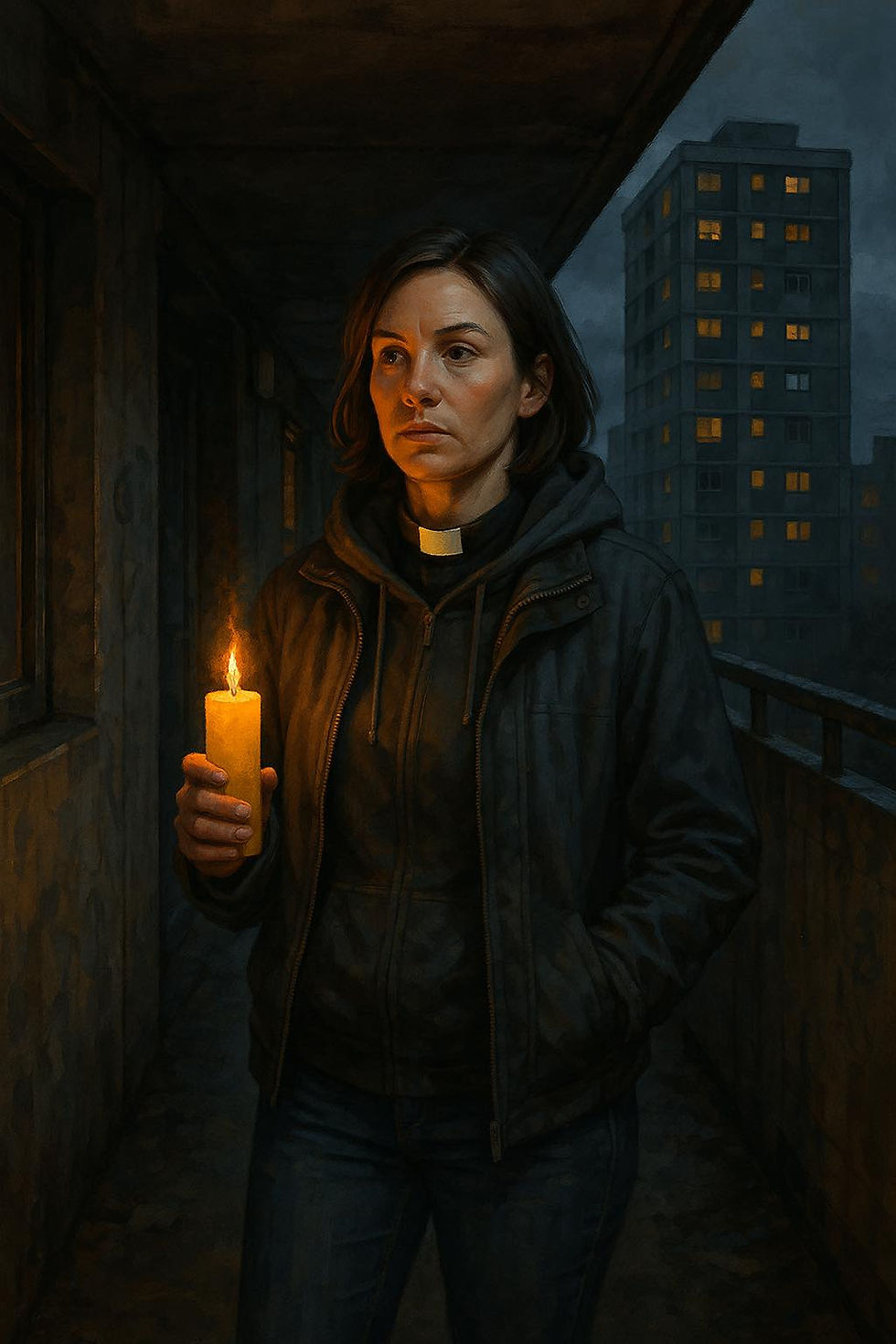
The priest liked to say
that everyone was welcome.
He meant it.
But still,
he wasn’t comfortable
with same-sex weddings.
He said his prayers,
read his Bible,
tried to stay faithful.
Yet people like Jo and Nina
kept breaking his categories,
messing with his theology,
teaching him more about humanness and connection
than any commentary ever could.
He didn’t judge them.
He couldn’t.
Not when he’d seen
their hands raised in worship,
their voices trembling
with hope.
One Monday
they came to him nervous,
hands clasped,
a smell of roll-ups and hope.
“Can we have one of those things?” they said.
He didn’t understand.
“One of those weddings,” they grinned.
“It’s Jo’s granddad’s anniversary,
the day he died.”
They wanted it in a few weeks.
Their voices shook,
half-expecting to be turned away.
He looked at them and said,
“I love you both, you know that.
And because I do,
I need to tell you something
you might not want to hear.”
He smiled, awkward,
the way you do
when grace brushes
against the rules.
“That’s not how weddings work,” he said.
“And even if it were,
the Church of England
doesn’t allow that kind of thing.”
“You don’t think I’m homophobic, do you?”
he half-joked.
“Course not,” they said,
relieved,
kind.
So he promised,
if they reminded him,
he’d pray on the day —
that they’d know
more of the fruits of the Spirit.
“And don’t turn up in a wedding dress,”
he said.
They laughed,
the laughter of people
who know the edge of exclusion
but choose joy anyway.
A few weeks later,
after the Lighthouse meeting
at St Brigid’s,
he was helping a lad into an ambulance —
blue lights,
the street humming with sorrow.
Then he saw them,
Jo and Nina,
and a crowd climbing the stairs —
friends from the LGBT community,
rainbow scarves,
quiet pride.
He’d forgotten.
At the front they stood,
Jo in her Leeds United top,
Nina in a Leeds Rhinos shirt,
two teams,
one city,
and love between them.
His heart raced.
He thought,
I could get shot at dawn
by both sides for this.
He felt the weight of every sermon,
every rule and prayer,
the long echo of should and must.
Yet something in him cracked —
the small, unguarded place
where love gets in.
And grace was there,
steady,
gentle,
in the mess and the confusion.
“Hello everyone,” he said,
“you’re all welcome.”
He told the story —
how it wasn’t a wedding,
how they’d talked about it,
how it couldn’t be one.
But before they left,
he said,
“Let’s pray.
That they’d know more
of love, joy, peace —
fruits of a Spirit
who doesn’t mind dirt
under her fingernails.”
They said amen.
He said,
“Right, that’s that then,
see you.
Don’t let the door hit you
in the butt on your way out.”
They smiled.
When the room emptied,
they slipped on rings,
quietly,
a secret vow
between themselves
and the God who had seen it all.
He was glad they didn’t ask him
to bless the rings.
He wouldn’t have.
He couldn’t,
even if he’d wanted to.
That night they rang.
“Thank you,” they said.
“It was a beautiful service.”
Within a year,
both breathed their last.
Nina first,
then Jo,
months later —
heart cracked open,
too much grief to bear.
When Nina died,
the priest went with a pastor.
They sat with Jo.
They cried.
At the funerals,
both of them —
the whole of Lighthouse turned out.
They were loved.
We wept.
The priest remembered:
No church bells.
No wedding.
Just love,
awkward and holy,
broken hearts holding each other.
Just grace,
steady as breath,
hovering over this city,
over Leeds,
and over a priest
still learning
that sometimes the light
does get through the cracks —
and when it does,
you don’t close the gap,
you stand there,
and let it in,
still hearing their song,
faint but fierce:
Do you know that all the dark
won’t stop the light
from getting through?
- Rev’d Jon Swales

Comments